120′ performance
may 2024, Klubi Gutenberg (Aparaaditehas)
part of the European Capital of Culture Tartu 2024 main programme
more information: https://www.piletilevi.ee/eng/tickets/teater/lavastus-bakhandid-87657/
directors: Liisbeth Horn, Elina Masing
creative producer: Greeta Võsu
production assistent: Gertrud Soone
dramaturge: Hendrik Kaljujärv
performers: Liisbeth Horn, Elina Masing, students of the Performing Arts Department of Tartu University Viljandi Culture Academy: Aleks Mathias Viidik, Elina Soosaar, Getriin Kotsar, Gretten Vaga, Isabel Laiapea, Kärt Kokkota, Kristin Kalam, Keiti Leon, Oskar Viirand, Pamela Ebber, Ria Ranniku, Tuuli Torop
stage and costume design: Pire Sova
sound design: Kenn-Eerik Kannike
lighting design: Karmi Pikkma
supported by: Cultural Endowment of Estonia, TARTU 2024, Tartu University Viljandi Culture Academy, Aparaaditehas
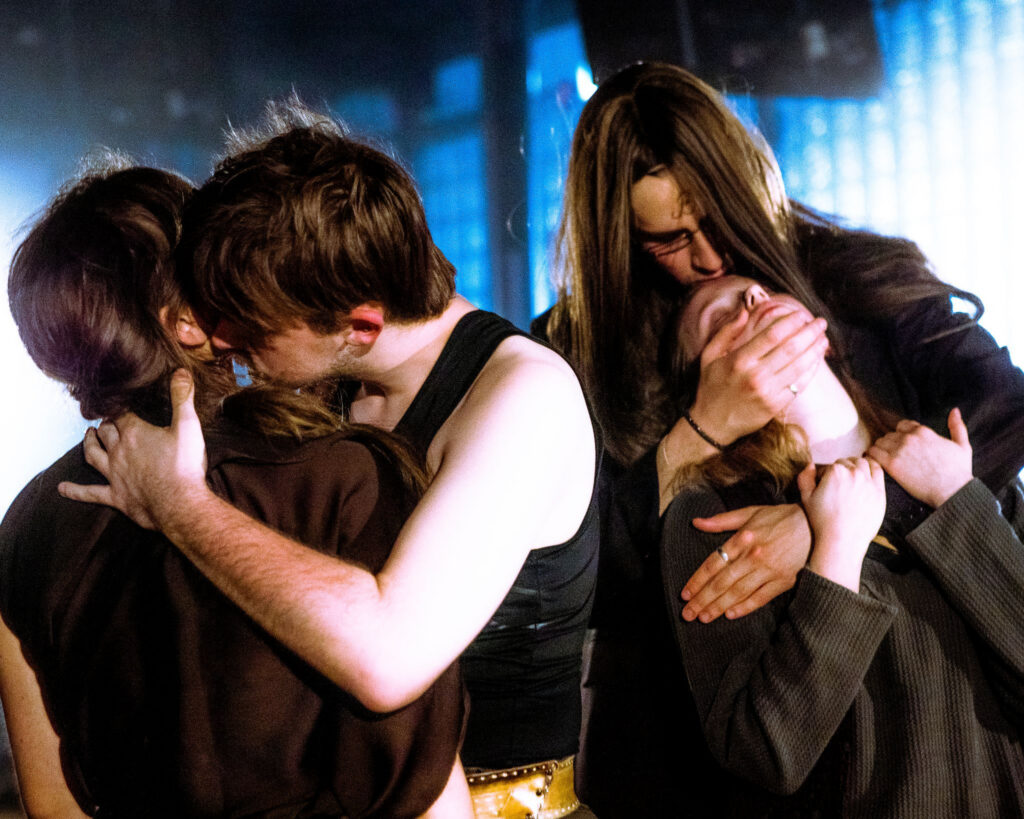
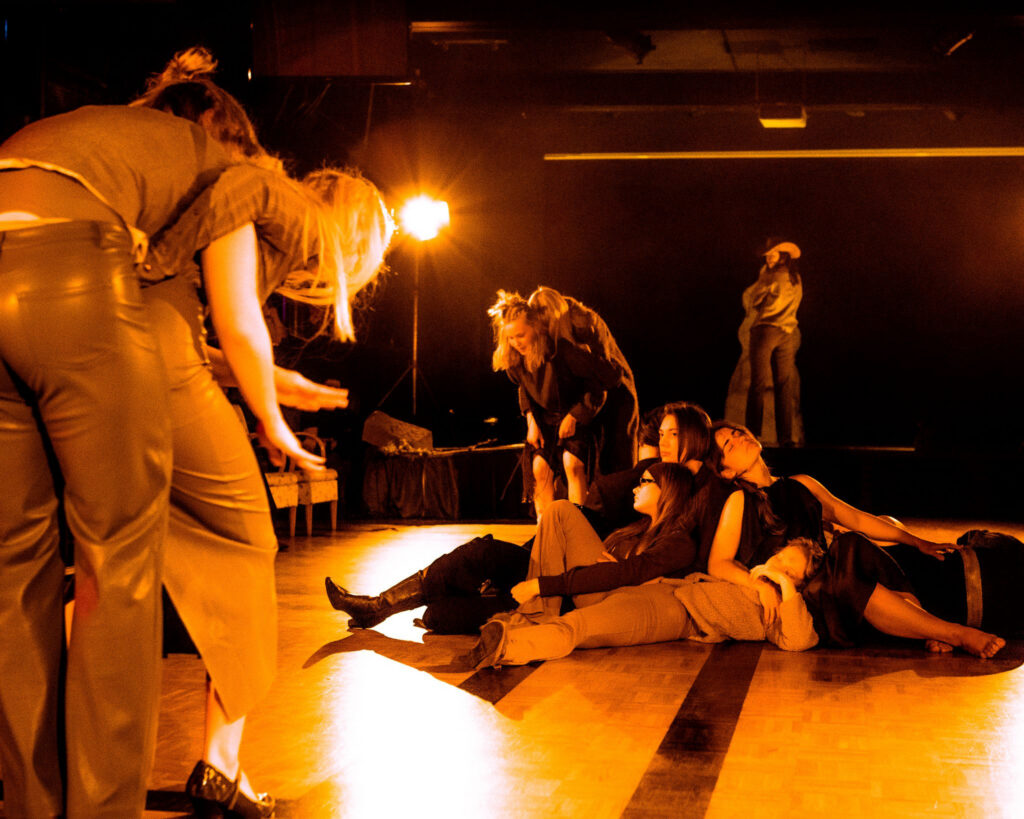
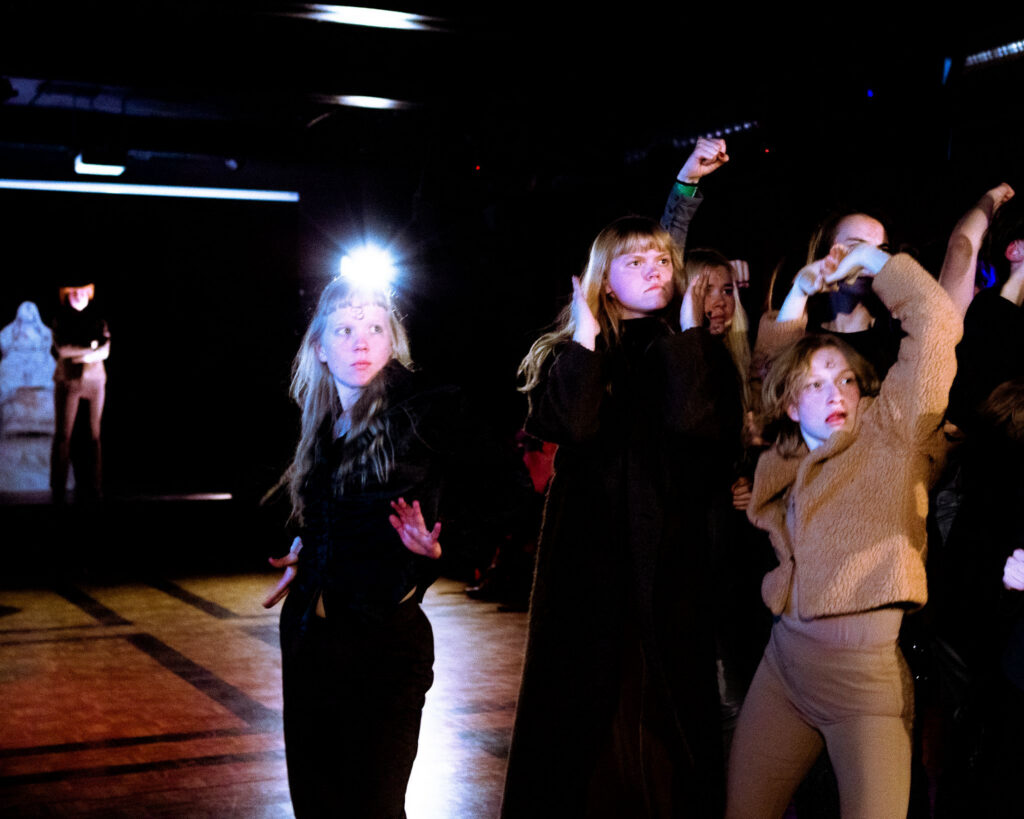
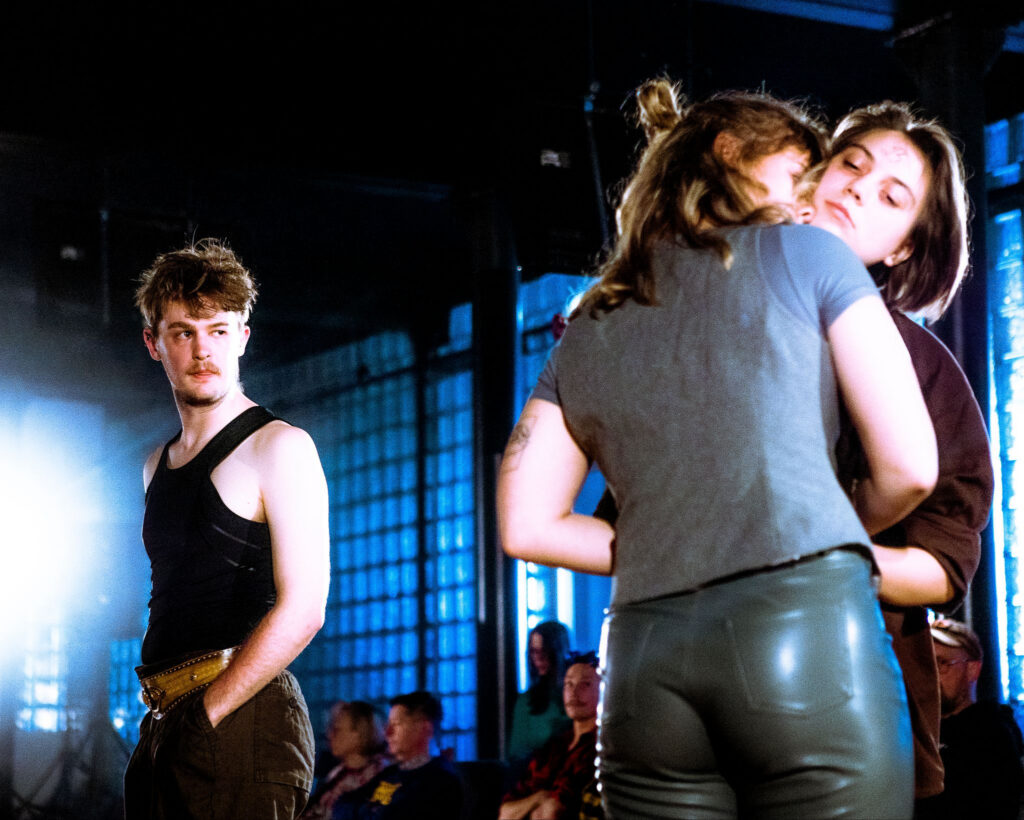
Piece in collaboration with Elina Masing and together with the BA students of dance we explored themes of religion, escapism, power, and rationality. The performance draws inspiration from the brutal and orgiastic celebrations depicted in Euripides’ ‘Bacchae’.
In ‘Bacchae,’ Dionysus, the king of losers, arrives in Thebes to offer an escape from reality. However, the conservative oligarchic king Pentheus resists his influence. Central to the play is a women-only orgy, which we interpreted as a space of liberation—a freedom to release the pressure of societal “have to’s” that the students feel, freedom to swear, joke, be ugly etc. It represented an unleashing of the dark, irrational side that is often repressed. We also engaged with concepts like social death, desire, obsession, hysteria and cult mentality, different forms of societal exclusion, unpacking how power operates through social norms and collective behavior. On stage, we worked through the paradoxical freedoms these states can afford, diving into lust, obsession, madness, collective ecstasy, complete cringeness and everything else that we had declared restricted during the process.

The production also included collaboration with a Christian youth group, enriching the exploration of religious and social frameworks, as Estonia is one of the most atheist countries in Europe. Along with the performance process the students and Tartu 3D Church youth group members organized five public talks with experts across various fields to research and debate the themes (at the beginning of 2024).
We tried to gain a nuanced reflection on the tension between rationality and irrationality, freedom and constraint, individual desire and collective identity. Collectively we fostered a deeper understanding of how power shapes bodies and minds through both visible and invisible social codes.